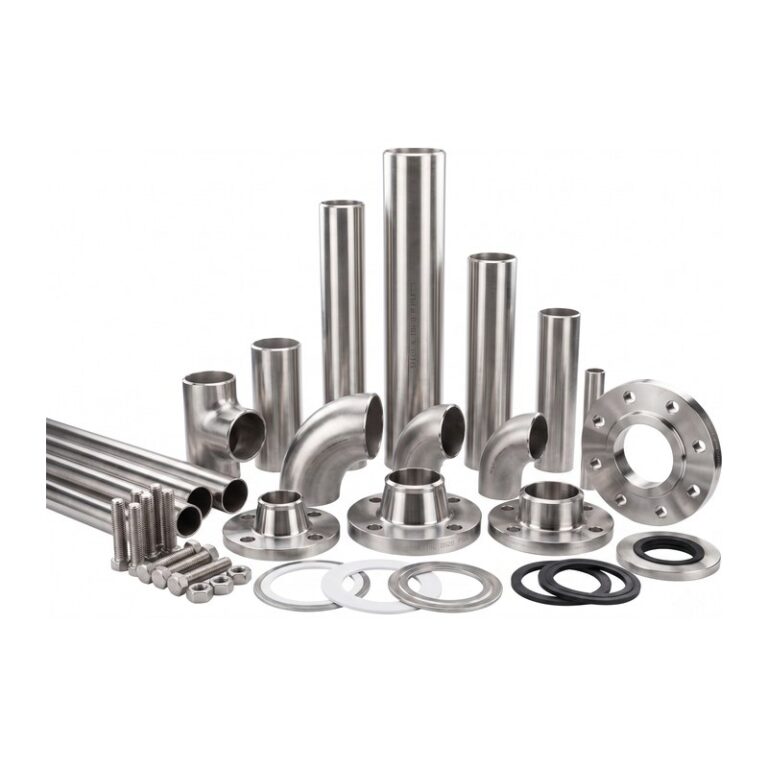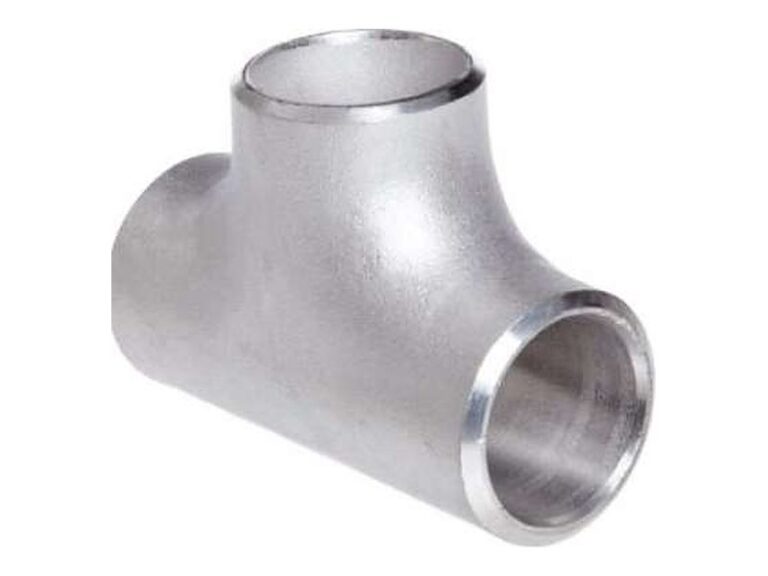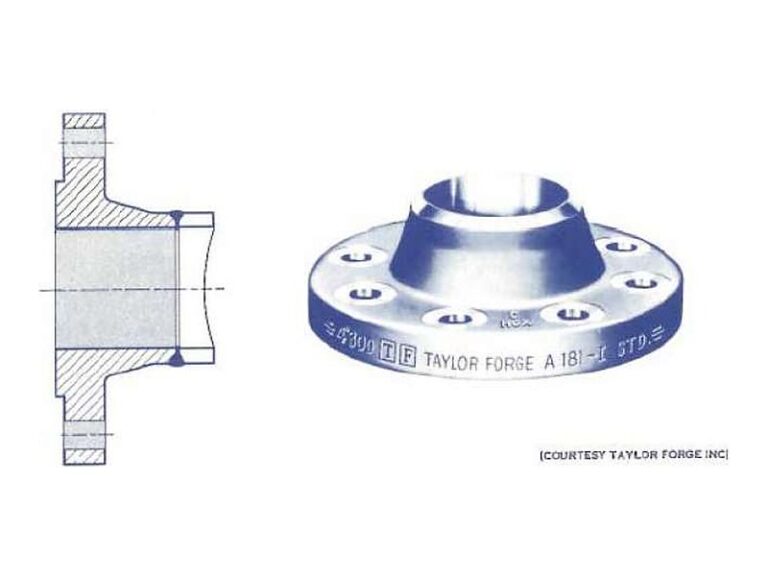
Hygienic Stainless Steel Tubing: Materials, Surface Finish, Standards
Hygienic (sanitary) stainless steel tubing is the circulatory system of food, beverage, dairy, pharmaceutical and cosmetics plants. This article summarises how hygienic tubing differs from industrial pipe, how to choose the material and surface finish, and the common dimensional standards. At the end you will find a tool to look up and compare sizes across standards.
1. How does hygienic tubing differ from industrial pipe?
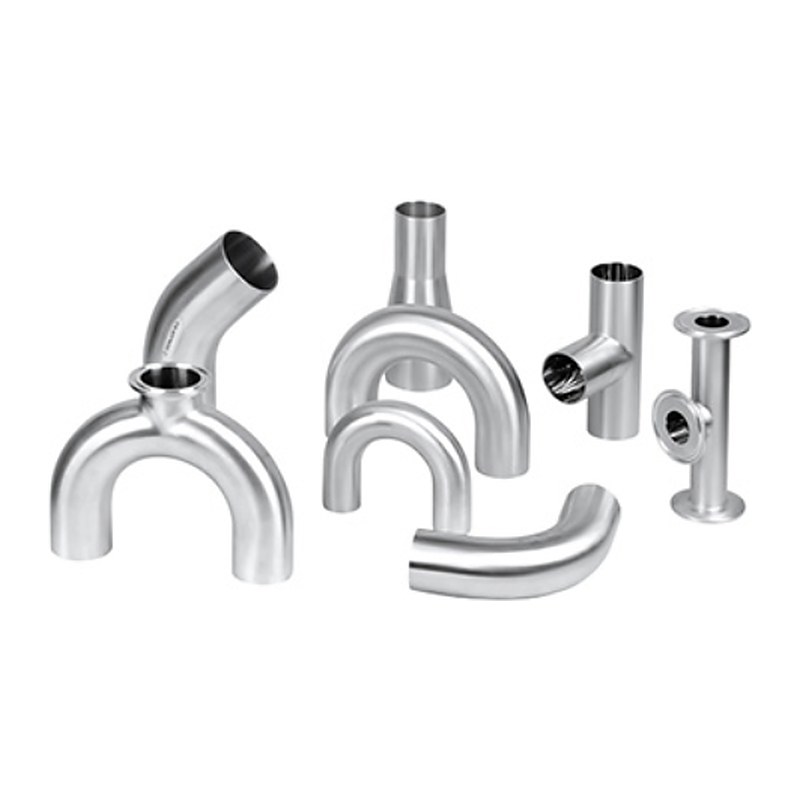
- Sized by actual outside diameter (OD): a 2″ tube has an OD of exactly 50.8 mm. Industrial pipe is sized by nominal NPS/DN.
- Thin wall, tight tolerances: typically 1.2 – 2.0 mm, suited to automatic orbital welding.
- Polished inside surface to a specified Ra, resisting deposits and easy to clean in place (CIP/SIP).
- Hygienic connections: orbital welds, clamps, hygienic unions; drainable design without product traps.
2. Hygienic tubing materials
| Grade | Characteristics | Typical applications |
|---|---|---|
| SUS304 / 304L (1.4301 / 1.4307) | Good corrosion resistance in normal service; low-carbon 304L welds better | Water, beverages, dairy, utility piping |
| SUS316L (1.4404) | Contains molybdenum; better chloride pitting resistance than 304L | Salted foods, CIP chemicals, pharmaceuticals |
| Low-sulphur 316L (S 0.005 – 0.017 %) | Sulphur controlled per ASME BPE for consistent orbital welds between material heats | Purified water (PW), water for injection (WFI), pharmaceuticals, biotech |
In practice at TNI, for pharmaceutical water systems (PW, WFI) and pharma equipment we always use low-sulphur 316L with mill test reports (MTR) for every heat, because when two tubes with very different sulphur contents are orbitally welded, the weld pool tends to shift to one side.
3. Surface roughness (Ra)
Ra is the arithmetic average roughness of the tube’s inside surface, in µm. The lower the Ra, the smoother the surface, the harder it is for microorganisms to adhere and the easier it is to clean. The finish is achieved by mechanical polishing (by abrasive grit size) and electropolishing (EP).
| Inside surface treatment | Achievable Ra (µm) |
|---|---|
| Pickled, not polished | ≤ 1.0 |
| Polished, 180 grit | ≤ 0.8 |
| Polished, 240 grit | ≤ 0.6 |
| Polished, 320 grit | ≤ 0.5 |
| Polished, 400 – 420 grit | ≤ 0.4 |
| Electropolished (EP) | ≤ 0.5 or ≤ 0.38 |
| ASME BPE designation | Method | Max Ra (µin) | Max Ra (µm) |
|---|---|---|---|
| SF1 | Mechanical | 20 | 0.51 |
| SF2 | Mechanical | 25 | 0.64 |
| SF3 | Mechanical | 30 | 0.76 |
| SF4 | Mechanical + electropolished | 15 | 0.38 |
| SF5 | Mechanical + electropolished | 20 | 0.51 |
| SF6 | Mechanical + electropolished | 25 | 0.64 |
Food and beverage plants usually specify Ra ≤ 0.8 µm. Pharmaceutical and purified water systems typically require SF1 (Ra ≤ 0.51 µm) or SF4 (electropolished, Ra ≤ 0.38 µm). The outside surface is usually Ra ≤ 0.8 µm.
4. Hygienic tubing dimensional standards
| Standard | Size designation | Example OD × t (mm) | Common tube length | Market |
|---|---|---|---|---|
| ASME BPE (ASTM A270 S2) | Inch: 1/2″ – 6″ | 50.8 × 1.65 | 20 ft (6.096 m) | Pharmaceuticals, biotech (USA, international) |
| 3-A / ASTM A270 | Inch: 1/4″ – 12″ | 50.8 × 1.65 | 20 ft (6.096 m) | Dairy, food (USA) |
| JIS G3447 / IDF | 8A, 10A, 15A; 1.0S – 6.5S | 50.8 × 1.5 | 4 m | Food, beverage, pharma (Japan) |
| SMS 3008 | By OD: 25 – 101.6 | 51 × 1.2 – 1.5 | 6 m | Food, dairy (Nordic countries) |
| DIN 11850 / EN 10357 | DN10 – DN250 | 53 × 1.5 (DN50) | 6 m | Food, beverage, pharma (Europe) |
| ISO 1127 | DN6 – DN300 | 60.3 × 1.6 – 2 (DN50) | 6 m | Industrial and hygienic stainless tubes, ISO series |
| JIS G3459 (for reference) | 6A – 300A, Sch5S/10S | 60.5 × 1.65 (50A) | 4 m / 6 m | Japanese industrial stainless pipe, utility piping |
The most common mistake: tubes all called “2 inch” or “50” can have very different outside diameters depending on the standard. Tubing and fittings from different standards cannot be welded or clamped together.
5. Notes on selecting and installing hygienic piping
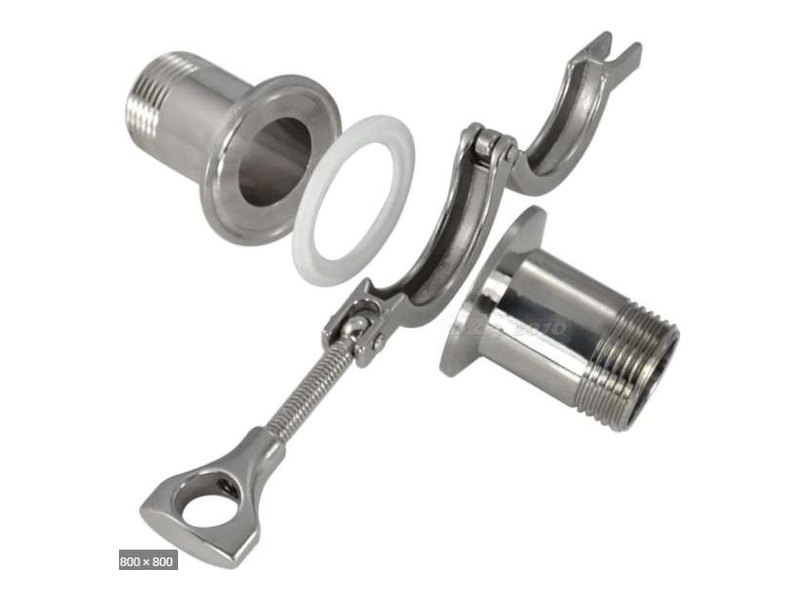
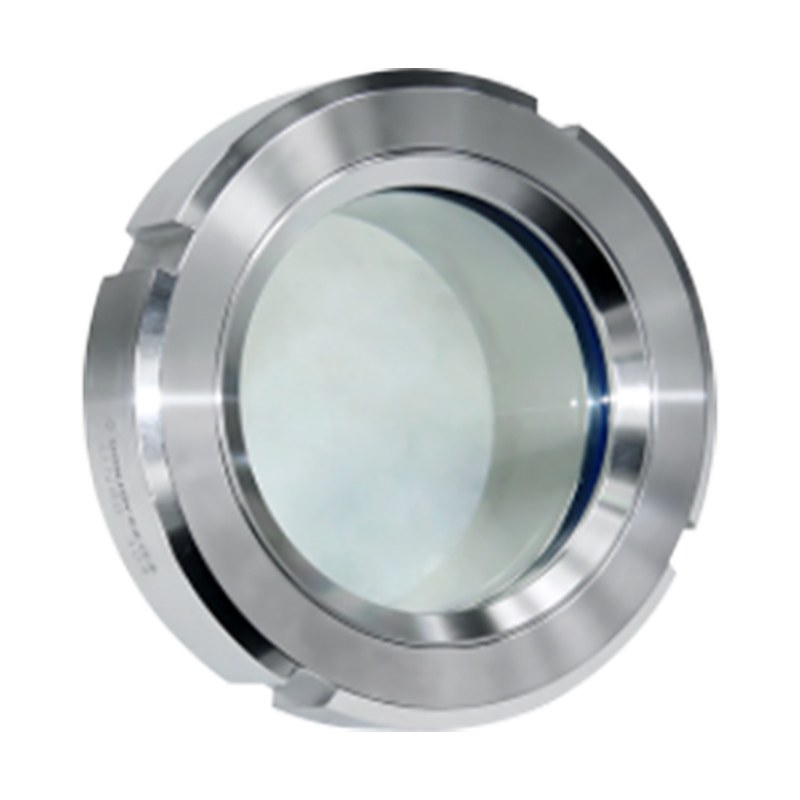
- Use one standard for all tubing, fittings, valves and clamp ferrules. ASME BPE, DIN 32676 and ISO 2852 ferrules have different dimensions.
- State clearly in the specification: standard, material, inside Ra, electropolished or not, MTR certificates.
- Orbital welding with internal purge gas, borescope inspection of welds and full weld documentation.
- Design for drainability (slope) and minimise dead-legs per ASME BPE recommendations.
- After installation: cleaning and passivation before start-up.
6. Hygienic tube size lookup
Select the standard, size and wall thickness to see the inside diameter, weight and volume per metre, common tube length and the equivalent sizes in other standards. The tool is also available on the Engineering calculators page.
Conclusion
Selecting hygienic tubing means considering three factors together: material (304L or 316L), surface finish matching the product’s hygiene requirements, and one consistent dimensional standard for all tubing, fittings and valves.
Need hygienic piping design or supply?
TNI designs and fabricates hygienic tanks and skids, and supplies hygienic stainless steel tubing, fittings and valves to ASME BPE, DIN, JIS and SMS.
See also: Hygienic pipes, fittings & valves · Pipe fittings and connection types · Industrial piping classification
References
- ASME BPE – Bioprocessing Equipment (surface designations SF1 – SF6, sulphur content of 316L).
- ASTM A270 – Seamless and Welded Austenitic and Ferritic/Austenitic Stainless Steel Sanitary Tubing.
- DIN 11850; EN 10357 – Austenitic stainless steel tubes for the food and chemical industry.
- ISO 1127 – Stainless steel tubes: dimensions, tolerances.
- SMS 3008; JIS G3447 – Stainless steel sanitary pipes; JIS G3459.
- Manufacturer catalogues for hygienic tubing and fittings (dimension and roughness tables).