Industrial Piping Classification: Materials, Standards, Applications
Choosing the right pipe at the design stage determines the service life, cost and safety of the whole system. This article summarises how industrial piping is classified by material, manufacturing method, connection type and the most common standards (ASME, ASTM, JIS, DIN), with practical notes from the TNI fabrication workshop.
1. Pipe and piping
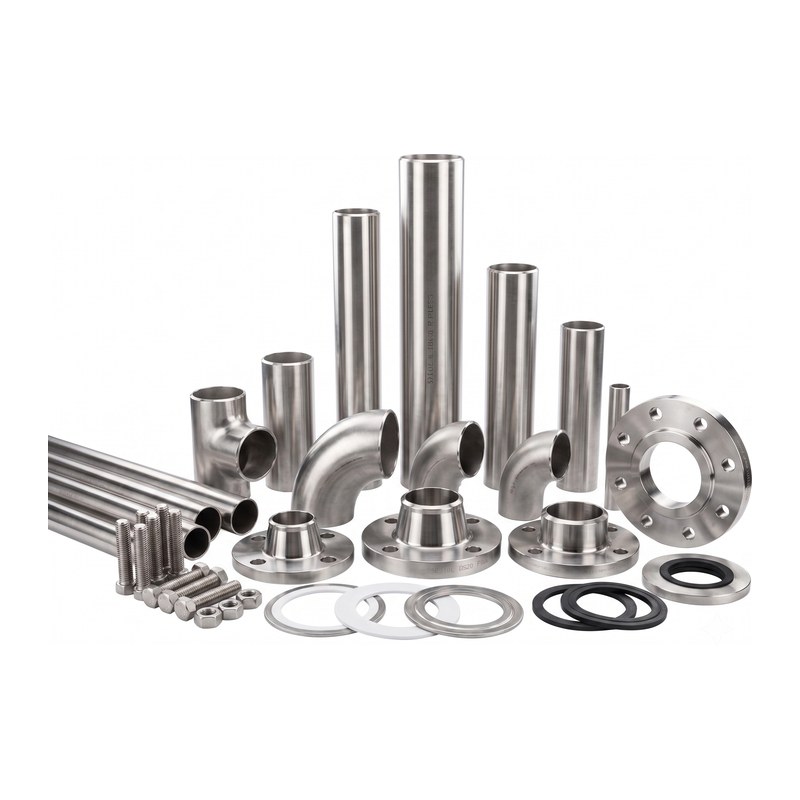
A pipe is a pressure-tight cylindrical component that conveys fluids: water, chemicals, steam, compressed air and so on. Piping is the pipe together with all its components: elbows, tees, reducers, flanges, valves, gaskets, bolts, supports and expansion joints.
When reading technical documents, distinguish between two terms:
- Piping code – sets the requirements for design, materials, fabrication, examination and testing of the whole system. Example: ASME B31.3 (Process Piping) for process piping in plants.
- Piping standard – defines the dimensions, pressure ratings and requirements of individual components such as pipe, flanges and fittings. Examples: ASME B36.10M, ASME B16.5, JIS B2220.
2. Classification by material
Piping materials fall into three main groups: metallic (carbon steel, low-alloy steel, stainless steel, non-ferrous alloys), non-metallic (thermoplastics, thermosets, ceramics, glass) and composite (FRP/GRP). In water treatment, chemical, food and pharmaceutical plants, the following are the most widely used:
| Pipe group | Typical materials | Common pipe standards | Typical applications |
|---|---|---|---|
| Carbon steel | Black and galvanised pipe (SGP, SGPW), STPG, STPT | ASTM A53, ASTM A106, API 5L; JIS G 3452, G 3454, G 3456; dimensions per ASME B36.10M | Process water, fire water, compressed air, steam, oil |
| Industrial stainless steel | SUS304/304L, SUS316/316L, duplex | ASTM A312, JIS G 3459; dimensions per ASME B36.19M | Chemicals, demineralised water, RO/UF, corrosive service |
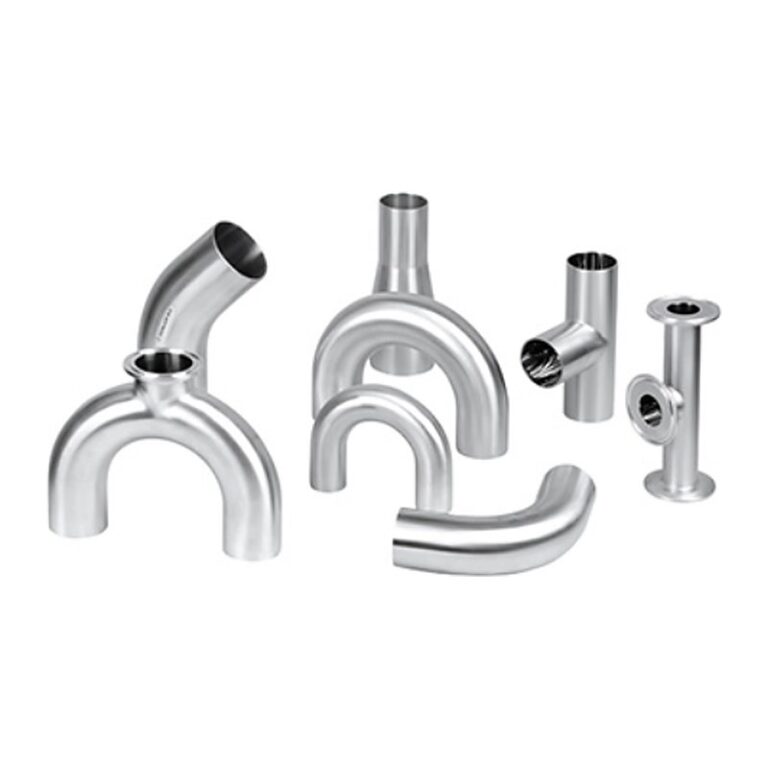
| Hygienic stainless steel | SUS304, SUS316L (internally polished) | ASTM A270, ASME BPE, JIS G 3447, DIN 11850 | Food, beverage, dairy, pharmaceuticals, CIP/SIP |
| Thermoplastics | PVC-U, C-PVC, PP, PVDF, HDPE, PPR | JIS K 6741 (PVC), ISO 4427 (PE), ISO 15874 (PP-R) | Corrosive chemicals, wastewater, potable water, ultrapure water |
| Composite | FRP / GRP | ASTM D2996, ISO 14692 (per project) | Large diameters, chemicals, seawater |
Notes on material selection
- “L” grades (304L, 316L) have low carbon content, which limits sensitisation of the heat-affected zone during welding. Prefer them for welded construction and corrosive service.
- 316L contains molybdenum and resists chloride pitting better than 304L. It is the usual choice for saline water, chloride-bearing chemicals and pharmaceutical equipment.
- Plastic pipe loses allowable pressure quickly as temperature rises (derating). Always check the manufacturer’s pressure–temperature curve. PVC-U suits cold water and low-temperature chemicals; C-PVC, PP and PVDF are used at higher temperatures.
- Outdoor plastic piping needs UV protection (pigmented pipe, paint or shielding) and closer support spacing than steel pipe because plastics sag more.
3. Classification by manufacturing method
| Pipe type | Characteristics | When to use |
|---|---|---|
| Seamless | No longitudinal weld, good pressure and temperature resistance, higher cost | High pressure and temperature; steam; oil and gas; small-bore pressure piping |
| Electric resistance welded (ERW) | Longitudinal high-frequency resistance weld, fast production, competitive price | Water, compressed air, structural use; medium pressure |
| Electric fusion welded (EFW) | Arc welded (usually with filler metal), suitable for large diameters and heavy walls | Stainless steel pipe and large-diameter steel pipe |
Under ASME B31.3, welded pipe may require a weld joint quality factor in the wall thickness calculation. For the same service conditions, welded pipe can therefore need a heavier wall than seamless pipe.
4. Classification by pipe end and joining method
There are three main pipe end types: beveled end (for butt welding), plain end (for socket welding or solvent cementing) and screwed end. They lead to the following joining methods:
| Joint type | Common standards | Advantages | Limitations |
|---|---|---|---|
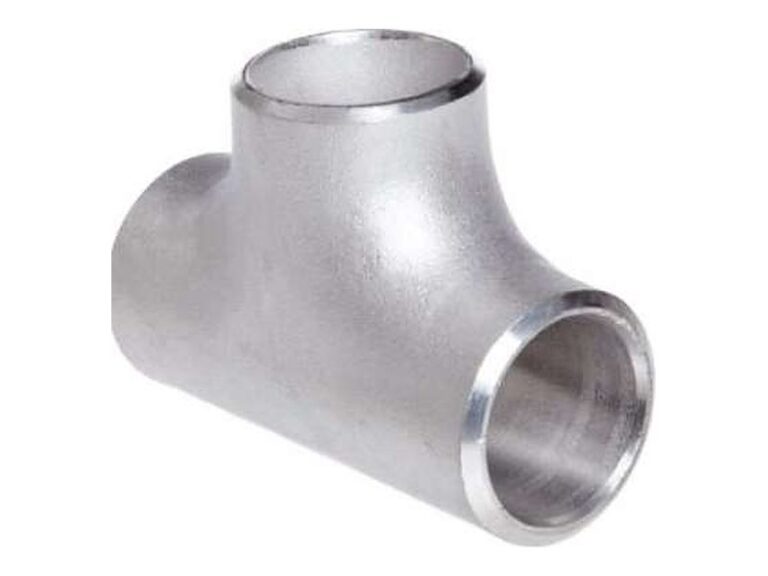
| Butt weld | ASME B16.9, B16.25 | Completely leak-tight, economical for large sizes | Requires bevelling; weld root protrusion affects flow |
| Socket weld | ASME B16.11 | Easy alignment, no weld spatter inside the bore; for small bore | Crevice prone to crevice corrosion; unsuitable for vibration |
| Threaded | NPT – ASME B1.20.1; BSP – ISO 7, ISO 228 | Fast field assembly, no welding | Harder to keep leak-tight, reduces wall thickness; unsuitable for vibration and high temperature |
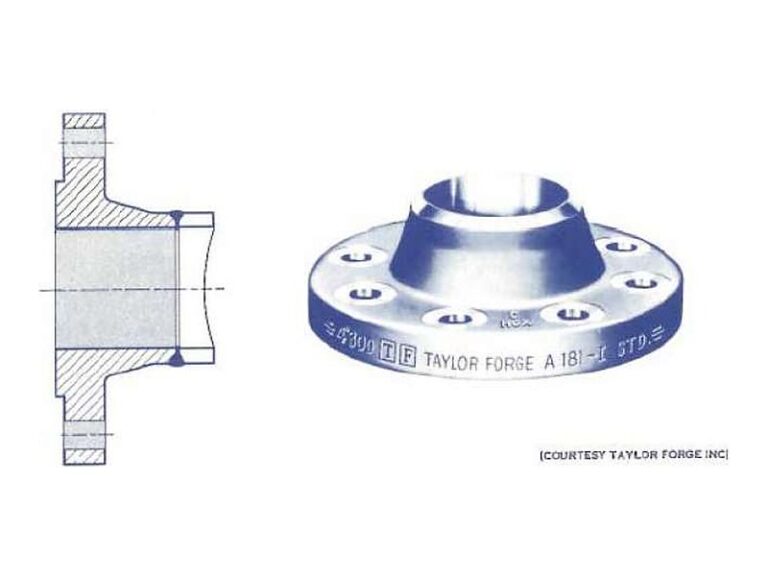
| Flanged | ASME B16.5, JIS B2220, EN 1092-1 | Easy to dismantle, connects to valves and equipment | High cost, poor resistance to bending moment |
| Hygienic clamp (tri-clamp) | ISO 2852, DIN 32676, ASME BPE | Quick release, easy to clean, for food and pharma | Limited pressure and size range |
| Grooved coupling | Manufacturer standard | Fast installation, accommodates small movement | High fitting cost |
| Pipe type | Butt weld | Socket weld | Threaded | Flanged | Hygienic clamp | Grooved |
|---|---|---|---|---|---|---|
| Carbon steel / galvanised | ✓ | ✓ | ✓ | ✓ | ✓ | |
| Industrial stainless steel | ✓ | ✓ | ✓ | ✓ | ✓ | |
| Hygienic stainless steel | ✓ | ✓ | ✓ | |||
| PVC / C-PVC | ✓ (solvent cement) | ✓ | ✓ | ✓ | ||
| HDPE / PP | ✓ (butt fusion) | ✓ (socket fusion) | ✓ | ✓ | ✓ |
5. Common piping standards
| Standard | Scope |
|---|---|
| ASME B31.3 | Process piping: design, materials, fabrication, examination |
| ASME B36.10M / B36.19M | Dimensions and wall thickness (schedule) of carbon steel / stainless steel pipe |
| ASME B16.5 | Steel pipe flanges and flanged fittings, NPS ½ to NPS 24 |
| ASME B16.9 / B16.11 | Butt-welding fittings / forged socket-weld and threaded fittings |
| JIS G 3452 / G 3454 / G 3459 | Ordinary carbon steel pipe (SGP) / pressure service carbon steel pipe (STPG) / stainless steel pipe |
| JIS G 3447, ASME BPE, DIN 11850 | Hygienic stainless steel tubing and fittings |
| JIS B2220 | Steel pipe flanges by K rating (5K, 10K, 20K…) |
6. Practical note: do not mix JIS and ASME
Projects for Japanese clients usually use JIS pipe (“A” sizes: 15A, 50A…), while much imported equipment has ASME (NPS) connections. For the same nominal size, the outside diameter of the two systems can differ, so pipe and welding fittings are not interchangeable:
| Nominal size | OD per JIS G 3452 (SGP) | OD per ASME B36.10M |
|---|---|---|
| 15A / NPS ½ | 21.7 mm | 21.3 mm |
| 25A / NPS 1 | 34.0 mm | 33.4 mm |
| 50A / NPS 2 | 60.5 mm | 60.3 mm |
| 65A / NPS 2½ | 76.3 mm | 73.0 mm |
| 80A / NPS 3 | 89.1 mm | 88.9 mm |
| 150A / NPS 6 | 165.2 mm | 168.3 mm |
| 200A / NPS 8 | 216.3 mm | 219.1 mm |
Likewise, JIS 10K and ASME Class 150 flanges differ in bolt circle diameter and number of holes, so they cannot be bolted together directly. At TNI, the piping class of each project is fixed when the spec library is set up in AutoCAD Plant 3D. Isometrics and MTOs are therefore always generated in a single standard system, avoiding wrong material orders.
Quick ASME pipe size lookup: use the TNI NPS ↔ DN ↔ OD converter.
Conclusion
Classifying piping by material, manufacturing method, joint type and standard gives design engineers and purchasing a common language. It is the basis for building piping classes, producing accurate material take-offs and controlling quality during fabrication and installation.
Need piping design or piping materials?
TNI provides 3D piping design and stress analysis, and supplies hygienic and industrial stainless steel pipe, fittings and valves to ASME, JIS and DIN.
See also: 3D/2D plant design · Piping stress analysis · Hygienic pipes, fittings & valves
References
- ASME B31.3 – Process Piping.
- ASME B36.10M, B36.19M – Welded and Seamless Wrought Steel Pipe / Stainless Steel Pipe.
- ASME B16.5, B16.9, B16.11 – Flanges and fittings.
- ASTM A312, A106, A270 – Stainless, carbon steel and sanitary tubing.
- JIS G 3452, G 3454, G 3459, G 3447; JIS B2220.
- ASME BPE – Bioprocessing Equipment; ISO 2852; DIN 11850, DIN 32676.
- TNI internal training material “Pipe and Fitting” (2020).